
Renal & Bladder
Sound Imaging offers renal and bladder ultrasound services in Anchorage and Soldotna, Alaska. Also known as a kidney and bladder ultrasound, this safe, painless imaging test uses sound waves to create detailed images of the kidneys, ureters, and bladder without radiation or needles. Our sonographers use renal ultrasound to look for kidney stones, cysts, masses, swelling caused by blocked urine flow (hydronephrosis), and changes associated with chronic kidney disease. A bladder ultrasound can assess bladder wall thickness, detect bladder stones, and measure the amount of urine remaining after urination. Your healthcare provider may order a renal and bladder ultrasound for flank or back pain, blood in the urine, frequent urinary tract infections (UTIs), difficulty urinating, or abnormal kidney function test results. If your provider has ordered a kidney and bladder ultrasound, contact Sound Imaging to schedule your appointment.

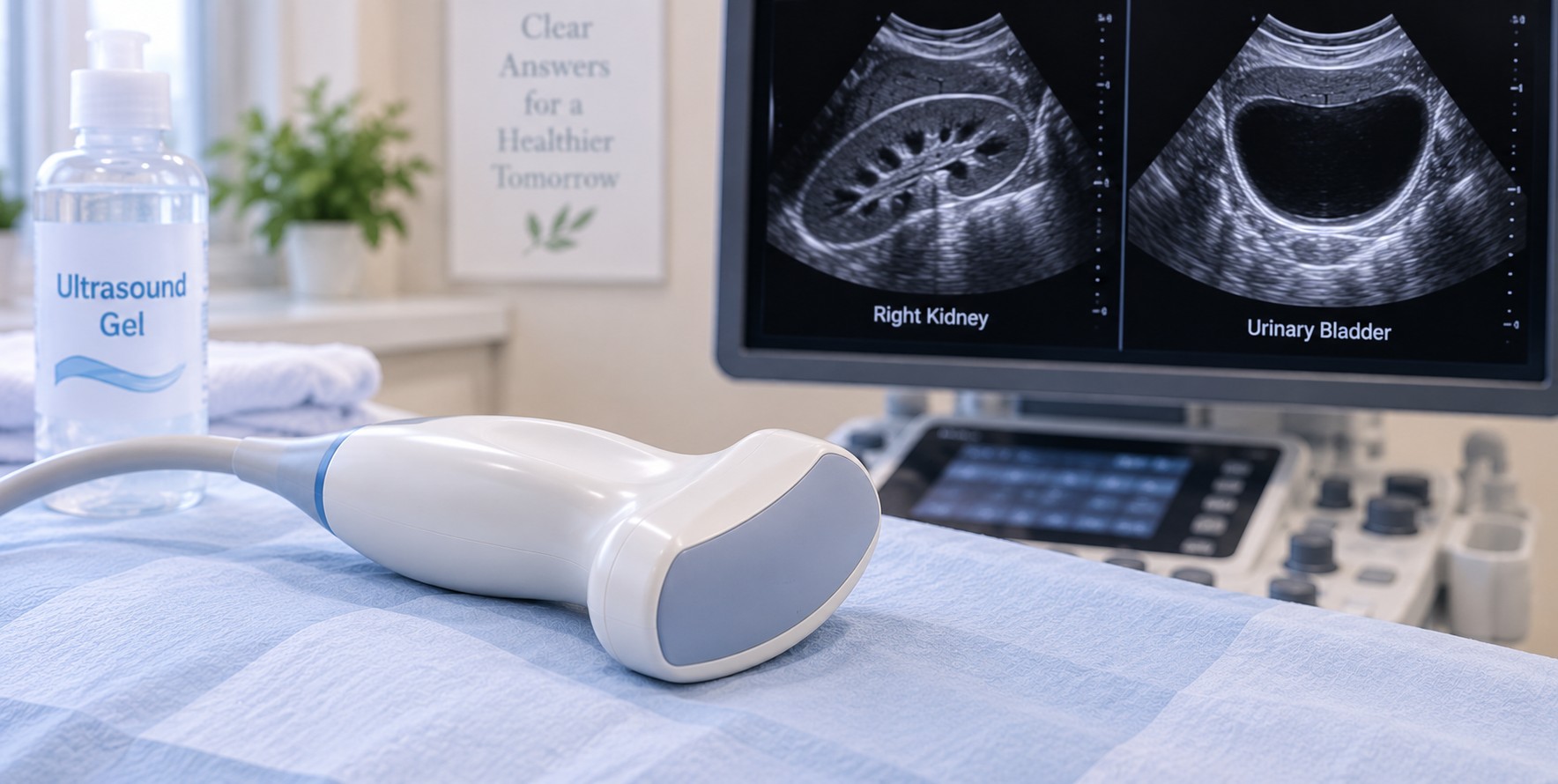
Understanding Your Renal and Bladder Ultrasound
A renal and bladder ultrasound uses sound waves to create detailed images of your kidneys, ureters, and bladder. This safe, painless exam does not use radiation or needles. At Sound Imaging, the ultrasound can help your healthcare provider evaluate your urinary system and identify potential problems early.
A renal and bladder ultrasound can help detect kidney stones, cysts, masses, and swelling caused by blocked urine flow (hydronephrosis). It can also show changes in kidney size or structure, bladder stones, bladder wall thickening, and the amount of urine remaining after urination. When Doppler imaging is used, the exam can also evaluate blood flow to the kidneys. Results are interpreted alongside your symptoms and other tests.


Depending on your symptoms and the reason for your exam, a renal and bladder ultrasound may be used to:
- Check the size, shape and health of your kidneys
- Look for kidney stones and bladder stones
- Find cysts, masses or other changes in the kidneys
- Check for swelling from blocked urine flow (hydronephrosis)
- Measure how much urine is left after you empty your bladder
- Find the cause of blood in the urine, flank pain or frequent UTIs
- Monitor chronic kidney disease or a transplanted kidney
- Provide more imaging when your healthcare provider recommends it
Different Renal and Bladder Ultrasounds
Complete Renal and Bladder Ultrasound
A complete renal and bladder ultrasound examines both kidneys and the bladder in one visit. It gives your provider a full view of your urinary system when symptoms like pain, blood in the urine or infections could come from more than one area.
Renal Ultrasound
A renal ultrasound focuses on your kidneys. It measures their size and checks the kidney tissue for scarring, stones, cysts or swelling, helping your provider understand kidney pain or abnormal kidney function blood tests.
Bladder Ultrasound
A bladder ultrasound checks the shape and wall of your bladder while it is full. It can find bladder stones, a thickened bladder wall or growths, and helps explain symptoms like painful urination, urgency or frequent urination.
Post-Void Residual (PVR) Ultrasound
A post-void residual ultrasound measures how much urine stays in your bladder after you empty it. It helps find urinary retention, which can be caused by an enlarged prostate, nerve problems or certain medicines, and can lead to repeated infections.
Kidney Stone Ultrasound
A kidney stone ultrasound looks for stones in the kidneys and bladder and checks whether a stone is blocking urine flow. It uses no radiation, so it is a good choice for pregnant patients and for people who need repeat imaging to follow kidney stones.
Hydronephrosis Ultrasound
A hydronephrosis ultrasound checks for swelling in the kidney caused by urine backing up. This can happen from a kidney stone, a narrowing in the ureter, an enlarged prostate or pregnancy, and finding it early helps protect kidney function.
Chronic Kidney Disease Ultrasound
A chronic kidney disease ultrasound checks kidney size and tissue changes over time. Small or scarred kidneys can be a sign of long-term kidney damage, so your provider may use this scan to help diagnose and monitor chronic kidney disease (CKD).
Kidney Cyst and Mass Ultrasound
A kidney cyst and mass ultrasound looks closely at a spot found in the kidney. It can show whether it is a simple fluid-filled cyst, which is usually harmless, or a more complex cyst or solid mass that needs follow-up or more testing.
Renal Artery Doppler Ultrasound
A renal artery Doppler ultrasound measures blood flow in the arteries that supply your kidneys. It is often ordered for high blood pressure that doesn’t respond to medicine, since narrowed kidney arteries can raise blood pressure and affect kidney health.
Transplant Kidney Ultrasound
A transplant kidney ultrasound checks the health of a donated kidney. It looks at kidney size, blood flow and fluid around the kidney, and helps your transplant team watch for rejection, blockage or other problems.
Prostate Ultrasound
A transabdominal prostate ultrasound measures the size of the prostate through the lower belly. It is often done with a bladder scan to check whether an enlarged prostate (BPH) is causing a weak stream, frequent urination or trouble emptying the bladder.
Pediatric Renal and Bladder Ultrasound
A pediatric renal and bladder ultrasound checks the kidneys and bladder in babies and children. It is often recommended after a urinary tract infection, for kidney swelling seen before birth or to follow vesicoureteral reflux, with no radiation and no needles.

What to Expect
Before your Appointment
-
Your preparation may vary depending on the type of ultrasound you are having. When you schedule your appointment, our staff will let you know if there are any special instructions, such as drinking water to arrive with a full bladder or avoiding food for a certain period of time.
- Wear comfortable, two-piece clothing so your back, sides and lower belly can be easily uncovered. If you have had kidney or bladder imaging somewhere else, bring those reports if you can, and bring any paperwork requested by your provider.
When You Arrive
- Our team will check you in and guide you to the ultrasound room. Your sonographer will explain the exam and help you get comfortably positioned before the study begins.
During Your Ultrasound
- A registered sonographer will apply warm gel to your skin and gently move a small handheld device called a transducer over your lower abdomen, sides, and back.
- To get clear images of your kidneys, the sonographer may ask you to lie on your back, turn onto each side, or lie on your stomach. You may also be asked to take a deep breath and hold it briefly. You may feel light pressure, especially if your bladder is full, but the exam should not be painful.
- For a post-void residual scan, the sonographer will first take images of your full bladder. You will then use the restroom to empty your bladder before returning for a few more images. These images measure how much urine remains in your bladder.
How Long Will It Take?
- Most renal and bladder ultrasounds take 20 to 30 minutes. A bladder scan or post-void residual measurement alone may take only a few minutes. A renal artery Doppler ultrasound or transplant kidney ultrasound usually takes 45 to 60 minutes.
After Your Exam
- There is no recovery time. You can empty your bladder right away, eat and drink normally, and return to your usual activities, including driving and work.
Getting Your Renal and Bladder Ultrasound Results
- A radiologist will review your kidney and bladder images and send a report to your healthcare provider, usually within a few business days. Your provider will contact you to explain your results and talk about next steps, such as medicine, follow-up imaging or a referral to a urologist or nephrologist. Your sonographer is not able to share results during the exam. If a finding like severe kidney swelling (hydronephrosis) needs quick attention, your provider will be contacted right away.
FAQ
Why do I need a full bladder for a kidney and bladder ultrasound?
A full bladder stretches the bladder wall so your sonographer can see it clearly and check for stones, thickening or growths. It also allows an accurate measurement of how well your bladder empties.
What if I can't hold my bladder until the exam?
Let our front desk staff know as soon as you arrive. If you need to empty your bladder, you can partly empty it and drink more water, or your sonographer can adjust the order of your exam.
Can an ultrasound find kidney stones?
Yes. A renal ultrasound can find many kidney stones and bladder stones, and can show whether a stone is blocking urine flow and causing kidney swelling.
Does a renal ultrasound hurt?
No. Most patients feel only light pressure. If you have kidney pain or tenderness, tell your sonographer so they can be extra gentle.
Is a kidney ultrasound safe for children and pregnant patients?
Yes. Ultrasound uses sound waves instead of radiation, so it is safe for babies, children and pregnant patients, and can be repeated as often as needed.
Insurance
Sound Imaging is in network with
Aetna
Blue Cross
Cigna
Meritain Health
Moda Health
TriWest
UnitedHealthcare
Alaska Medicaid including Denali KidCare
Medicare (coming soon)
Coverage and benefits vary by individual insurance plan. Questions about your coverage? Call (907) 531-2726.
No Surprise Act
Public Health Service (PHS) Act 2799B-3 and Section 45 of the Code of Federal Regulations (CFR) 149.430, describe medical consumer legal protections known as the No Surprise Act (NSA).
If you have an emergency medical condition and get emergency services from an out of network provider or facility, the most the provider or facility may bill you is your plan’s in network cost-sharing amount (such as copayments and coinsurance). You can’t be balance billed for these emergency services.
No Surprise Act Good Faith Estimates
Upon request, we are happy to provide registered patients with a good faith estimate based upon physician prescribed services, which will include expected charges for items or services as published in our current standard fee schedule. The estimate is based on information known at the time the estimate was created. The Good Faith Estimate does not include any unknown or unexpected costs that may arise during treatment. You could be charged more if complications or special circumstances occur.