
Gynecologic & Pelvic
Sound Imaging provides gynecologic ultrasound, also called a pelvic ultrasound, in Anchorage and Soldotna, Alaska. It is a safe, painless imaging test that uses sound waves to create clear pictures of your uterus, ovaries, cervix, and bladder. It uses no radiation. At Sound Imaging, our sonographers perform both transabdominal and transvaginal pelvic ultrasound based on your provider’s orders and individual needs.
Your healthcare provider may recommend a pelvic ultrasound to investigate pelvic pain, heavy or abnormal bleeding, or irregular periods. This exam can help identify fibroids, endometrial polyps, ovarian cysts, IUD placement, and findings associated with endometriosis. Contact Sound Imaging to schedule your pelvic ultrasound.

Understanding Your Gynecologic and Pelvic Ultrasound
A gynecologic and pelvic ultrasound gives important information about your uterus, ovaries, cervix, and bladder. It uses sound waves to create clear images. At Sound Imaging, a pelvic ultrasound can help your healthcare provider check your reproductive health and find the cause of symptoms like pelvic pain or abnormal bleeding.
A pelvic ultrasound provides detailed views of your uterus and ovaries beyond a routine pelvic exam. Transabdominal and/or transvaginal ultrasound can help identify fibroids, ovarian cysts, polyps, and signs of endometriosis, as well as IUD placement. These findings help your provider evaluate your symptoms and make informed decisions about your gynecologic care.


Depending on your symptoms and the reason for your exam, a gynecologic and pelvic ultrasound may be used to:
- Find the cause of pelvic pain or pressure
- Check for fibroids, polyps and ovarian cysts
- Find the cause of heavy, irregular or abnormal bleeding
- Measure the thickness of your uterine lining
- Look for signs of endometriosis or PMOS, formerly called PCOS
- Confirm your IUD is in the right position
- Check blood flow to your ovaries and uterus
- Provide more imaging when your healthcare provider recommends it
Different Gynecologic and Pelvic Ultrasounds

Different Ultrasounds During Pregnancy
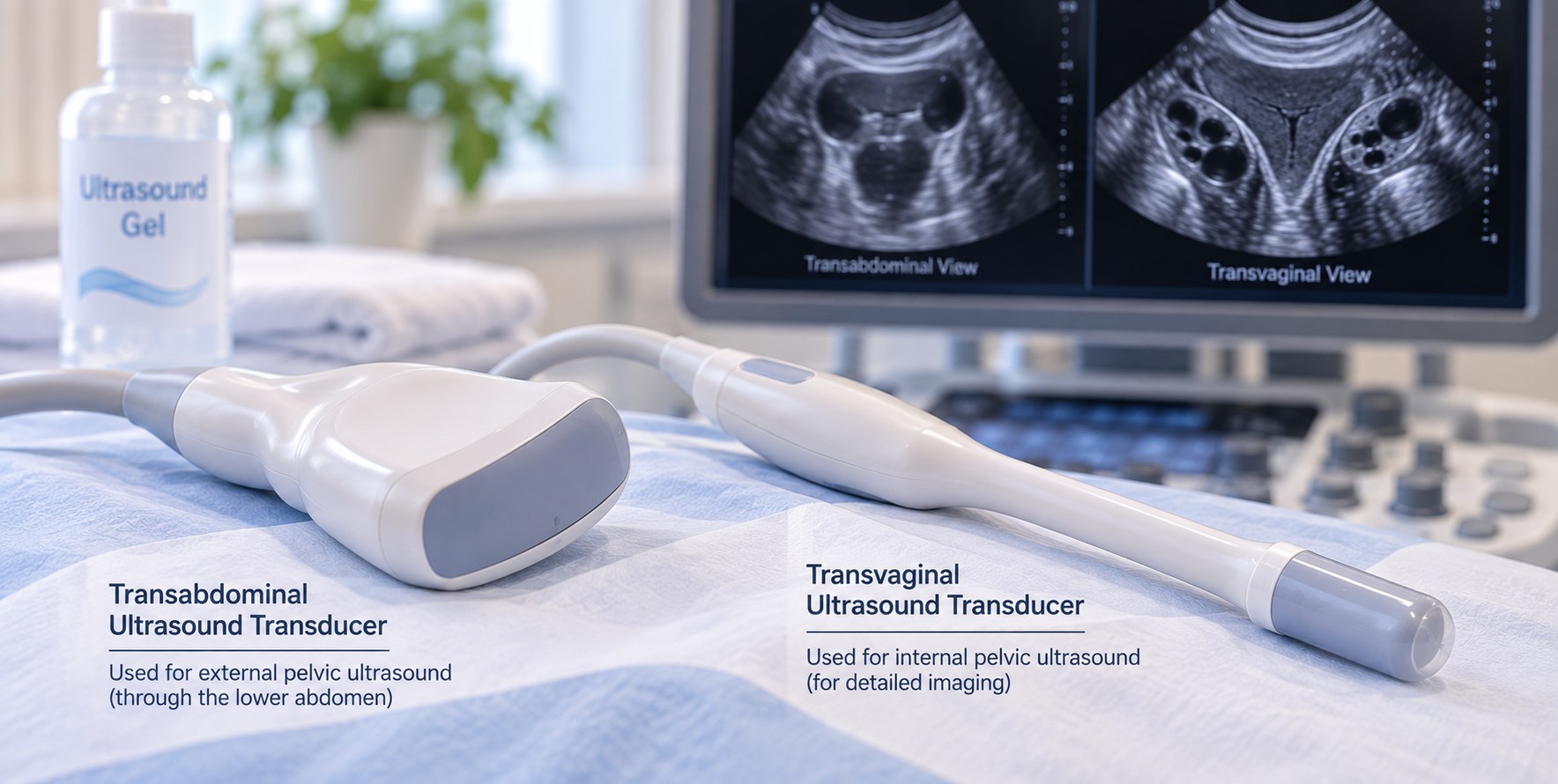
Transabdominal Pelvic Ultrasound
A transabdominal pelvic ultrasound creates images of your uterus, ovaries and bladder by moving a transducer across your lower belly. You will usually need a full bladder, which helps lift the bowel out of the way and gives a clear view of your pelvic organs.
Transvaginal Ultrasound
A transvaginal ultrasound uses a thin, covered probe gently inserted a short way into the vagina. Because the probe sits closer to your pelvic organs, it gives more detailed images of the uterus, uterine lining and ovaries than an abdominal scan.
Complete Pelvic Ultrasound
A complete pelvic ultrasound combines a transabdominal and a transvaginal ultrasound in one visit. The abdominal scan gives a wide view of the pelvis, and the transvaginal scan gives close-up detail, so your provider gets the most complete picture of your reproductive health.
Pelvic Ultrasound for Pelvic Pain
A pelvic ultrasound is often the first imaging test for pelvic pain. It can help find the cause of sharp, dull or ongoing pain, including ovarian cysts, fibroids, endometriosis, infection or ovarian torsion, so your provider can plan the right treatment.
Pelvic Ultrasound for Abnormal or Heavy Bleeding
A pelvic ultrasound can help find the cause of heavy periods, bleeding between periods or irregular cycles. It checks your uterus and uterine lining for fibroids, polyps, thickening or other changes that may be causing abnormal uterine bleeding.
Fibroid Ultrasound
A fibroid ultrasound finds and measures uterine fibroids, which are common noncancerous growths in the uterus. It shows the size, number and location of fibroids, helps explain symptoms like heavy bleeding or pelvic pressure, and tracks changes over time.
Ovarian Cyst Ultrasound
An ovarian cyst ultrasound checks the size, shape and contents of a cyst on the ovary. It can show whether a cyst is simple and fluid-filled or more complex, helping your provider decide whether to monitor it, treat it or order more testing.
Ovarian Torsion Ultrasound
An ovarian torsion ultrasound uses Doppler imaging to check blood flow to the ovary. Ovarian torsion happens when an ovary twists and cuts off its own blood supply, causing sudden, severe pelvic pain. It is a medical emergency that needs fast diagnosis.
Endometrial Thickness Ultrasound
An endometrial thickness ultrasound measures the lining of your uterus. It is often recommended for bleeding after menopause, irregular bleeding or while taking hormone therapy, because a thickened lining can be a sign of polyps, hyperplasia or other changes that need follow-up.
IUD Placement Ultrasound
An IUD placement ultrasound confirms that your intrauterine device is in the right position inside the uterus. It may be recommended if you can’t feel your IUD strings, have pain or bleeding, or your provider wants to check placement after insertion.
Pelvic Ultrasound for Endometriosis
A pelvic ultrasound for endometriosis looks for signs of endometriosis, such as endometriomas (chocolate cysts) on the ovaries and areas of thickened or stuck-together tissue. It can help explain painful periods, pain during sex and ongoing pelvic pain.
Pelvic Ultrasound for PMOS
A pelvic ultrasound for polyendocrine metabolic ovarian syndrome (PMOS), formerly called PCOS, checks your ovaries for many small follicles and increased ovarian size. Along with symptoms like irregular periods, acne or unwanted hair growth and blood tests, it helps your provider diagnose PMOS.
Saline Infusion Sonohysterogram (SIS)
A saline infusion sonohysterogram gently fills the uterus with sterile saline during a transvaginal ultrasound. The fluid outlines the inside of the uterus, making it easier to find polyps, fibroids or scar tissue that may be causing abnormal bleeding.
3D Pelvic Ultrasound
A 3D pelvic ultrasound creates detailed, three-dimensional images of your uterus and ovaries. It gives a clearer view of the uterine shape, fibroid location and IUD position, helping your provider plan procedures and treatment more accurately.
Pelvic Doppler Ultrasound
A pelvic Doppler ultrasound measures blood flow in the veins and arteries of your pelvis. It can help find pelvic congestion syndrome, a cause of ongoing pelvic pain from enlarged pelvic veins, and check blood flow to masses, fibroids or the ovaries.
Ovarian Cancer Screening Ultrasound
An ovarian cancer screening ultrasound may be recommended for women at higher risk, such as those with a BRCA gene mutation or a strong family history. Along with a CA-125 blood test, it checks the ovaries for changes that need closer follow-up.
Pediatric and Adolescent Pelvic Ultrasound
A pediatric pelvic ultrasound uses a gentle transabdominal scan to check the uterus and ovaries in girls and teens. It can help find the cause of pelvic pain, early or delayed puberty and irregular periods, with no radiation and no internal exam.

What to Expect
Before your Appointment
-
Your preparation may vary depending on the type of ultrasound you are having. When you schedule your appointment, our staff will let you know if there are any special instructions, such as drinking water to arrive with a full bladder or avoiding food for a certain period of time.
- Please wear comfortable clothing and bring any information or paperwork requested by your provider.
When You Arrive
- Our team will check you in and guide you to the ultrasound room. Your sonographer will explain the exam and help you get comfortably positioned before the study begins.
During Your Ultrasound
- Transabdominal ultrasound: You will lie on your back while your sonographer places warm gel on your lower belly and gently moves a small handheld transducer across your skin. You may feel pressure on your full bladder, but the exam should not hurt.
- Transvaginal ultrasound: You will lie on your back with your knees bent. Your sonographer will gently insert a thin, covered and lubricated probe a short way into the vagina. Most patients feel only mild pressure, similar to a pelvic exam. This gives a closer, more detailed view of your uterus, uterine lining and ovaries.
- Your sonographer may use Doppler imaging to check blood flow, which can make a soft whooshing sound. You are welcome to ask for a chaperone at any time, and please let your sonographer know if you feel uncomfortable or have any tenderness.
How Long Will It Take?
- Most pelvic ultrasounds take 30 to 45 minutes. A transvaginal ultrasound on its own may take about 15 to 30 minutes. A complete pelvic ultrasound with both parts, or a saline infusion sonohysterogram, may take up to an hour.
After Your Exam
- There is no recovery time. You can empty your bladder right away and return to your normal activities, including driving and work. You may notice light spotting after a transvaginal ultrasound, which is normal. After a saline infusion sonohysterogram, you may have mild cramping and some fluid discharge.
We’re Here to Make Your Visit Comfortable
- A radiologist will review your images and send a report to your healthcare provider. Your provider will contact you to explain your results and talk about any next steps. Sonographers are not able to share results during the exam, but they are happy to explain what they are doing.
FAQ
Why do I need a full bladder for a pelvic ultrasound?
A full bladder pushes the bowel out of the way and acts as a window, so your uterus and ovaries can be seen clearly during a transabdominal ultrasound.
Does a transvaginal ultrasound hurt??
No. Most patients feel only mild pressure. The probe is thin and covered, and your sonographer will go slowly and check that you are comfortable.
Can I have a pelvic ultrasound on my period?
Yes. Your period does not affect the images. You will just need to remove a tampon before a transvaginal ultrasound.
Do I need a transvaginal ultrasound?
Not always. Your provider will order the type of pelvic ultrasound that best fits your symptoms. A transvaginal ultrasound is often added because it gives more detailed images. If you have concerns, talk with your provider or our staff.
What can a pelvic ultrasound find?
A pelvic ultrasound can help find fibroids, ovarian cysts, polyps, endometriosis, polyendocrine metabolic ovarian syndrome (PMOS), formerly called PCOS , a thickened uterine lining and IUD placement problems. It can also help find the cause of pelvic pain and abnormal bleeding.
Is a pelvic ultrasound safe?
Yes. Ultrasound uses sound waves instead of radiation and is safe for patients of all ages.
Insurance
Sound Imaging is in network with
Aetna
Blue Cross
Cigna
Meritain Health
Moda Health
TriWest
UnitedHealthcare
Alaska Medicaid including Denali KidCare
Medicare (coming soon)
Coverage and benefits vary by individual insurance plan. Questions about your coverage? Call (907) 531-2726.
No Surprise Act
Public Health Service (PHS) Act 2799B-3 and Section 45 of the Code of Federal Regulations (CFR) 149.430, describe medical consumer legal protections known as the No Surprise Act (NSA).
If you have an emergency medical condition and get emergency services from an out of network provider or facility, the most the provider or facility may bill you is your plan’s in network cost-sharing amount (such as copayments and coinsurance). You can’t be balance billed for these emergency services.
No Surprise Act Good Faith Estimates
Upon request, we are happy to provide registered patients with a good faith estimate based upon physician prescribed services, which will include expected charges for items or services as published in our current standard fee schedule. The estimate is based on information known at the time the estimate was created. The Good Faith Estimate does not include any unknown or unexpected costs that may arise during treatment. You could be charged more if complications or special circumstances occur.