
Fertility & Follicle Monitoring
Sound Imaging provides fertility ultrasound and follicle monitoring in Anchorage and Soldotna, Alaska. Using transvaginal ultrasound, our sonographers measure the size and number of developing follicles and assess the uterine lining (endometrium) thickness. These exams help your fertility specialists evaluate your response to treatments and estimate when ovulation may occur.
Whether you are tracking a natural cycle or undergoing fertility treatment, ultrasound monitoring provides information your provider needs to guide your care. Results can help your fertility team plan timed intercourse, intrauterine insemination (IUI), trigger injections, and in vitro fertilization (IVF) egg retrieval. We work with your referring provider to support your fertility monitoring needs close to home.

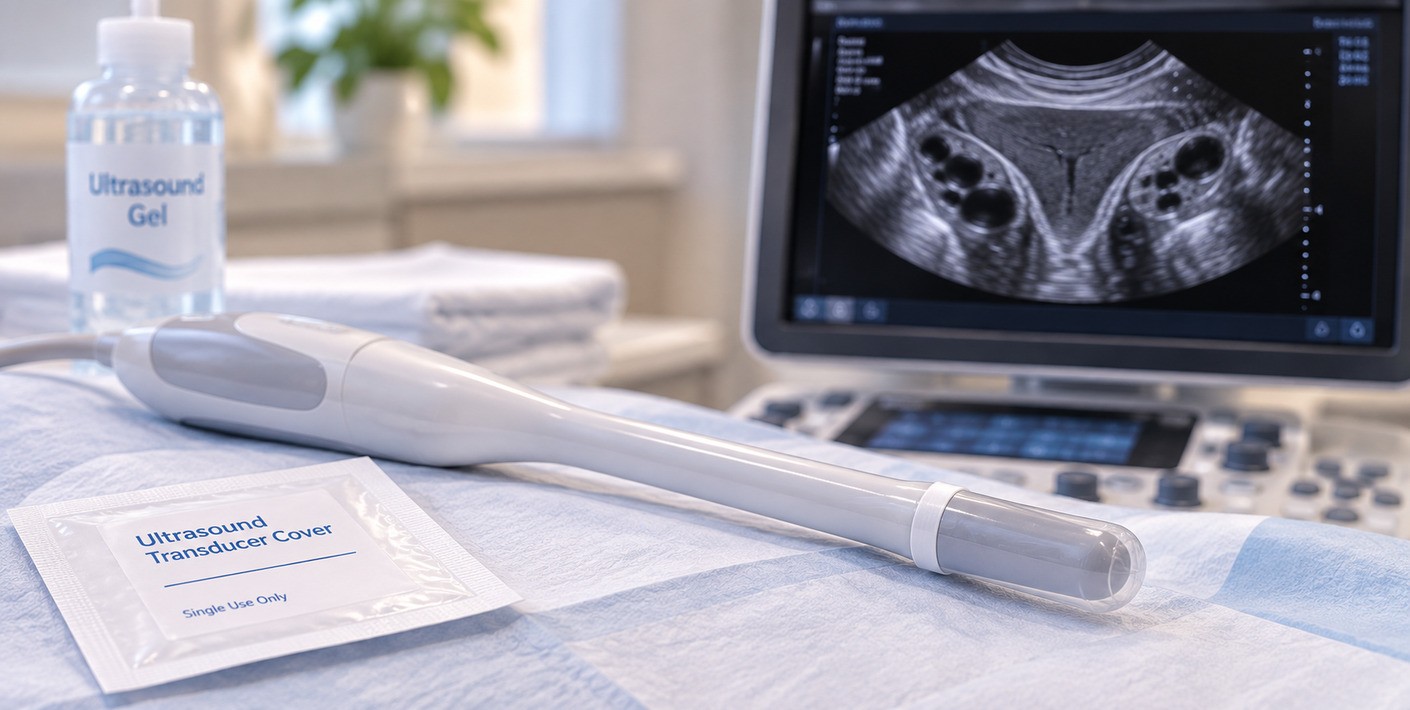
Understanding Your Fertility and Follicle Monitoring Ultrasound
Fertility and follicle monitoring ultrasound gives important information about your ovaries and uterus throughout your menstrual cycle. It uses a transvaginal ultrasound to create clear images without radiation. At Sound Imaging, follicle monitoring helps your fertility specialist track follicle growth and determine when ovulation is likely.
Follicle-monitoring ultrasound complements blood tests and ovulation kits by showing developing ovarian follicles and the uterine lining. From an early-cycle baseline ultrasound to follow-up scans, these exams track follicle size, number, and growth, as well as endometrial thickness. Your fertility specialist uses these findings to guide treatment and plan timing of injections, intrauterine insemination (IUI), or IVF egg retrieval.


Depending on where you are in your cycle and your fertility treatment plan, a follicle monitoring ultrasound may be used to:
- Check your ovaries and uterus at the start of your cycle
- Count your antral follicles to help assess ovarian reserve
- Measure the size and number of developing follicles
- Track how your ovaries respond to fertility medicine
- Measure the thickness of your uterine lining (endometrium)
- Help time trigger shots, intercourse, IUI or IVF egg retrieval
- Confirm that ovulation has happened
- Provide more imaging when your fertility specialist recommends it healthcare provider
Different Fertility Ultrasounds
Baseline Ultrasound
A baseline ultrasound is done at the start of your cycle, usually on day 2 or 3. It checks your ovaries for cysts, counts your antral follicles and makes sure your uterine lining is ready before fertility medicine begins.
Antral Follicle Count (AFC) Ultrasound
An antral follicle count ultrasound counts the small resting follicles in both ovaries early in your cycle. Along with blood tests like AMH, it helps your fertility specialist estimate your ovarian reserve and plan the right medicine dose for your treatment.
Follicle Tracking Ultrasound
Follicle tracking ultrasounds are done every few days as ovulation gets closer. They measure how your follicles are growing and check your uterine lining, helping your provider choose the best time for a trigger shot, IUI or egg retrieval.
IVF Stimulation Monitoring Ultrasound
During IVF, stimulation monitoring ultrasounds track how your ovaries respond to fertility injections. Frequent scans measure follicle growth, help your specialist adjust your medicine and find the right time for egg retrieval, while watching for overstimulation (OHSS).
Ovulation Confirmation Ultrasound
An ovulation confirmation ultrasound is done after your expected ovulation date. It checks whether the leading follicle has released an egg, giving your provider useful information about your cycle and treatment.
Endometrial Lining Ultrasound
An endometrial lining ultrasound measures the thickness and pattern of your uterine lining. A healthy lining is important for implantation, so this scan is often used before an embryo transfer.
Saline Infusion Sonohysterogram (SIS)
A saline infusion sonohysterogram, also called sonohysterography, uses a small amount of sterile saline to gently fill the uterus during a transvaginal ultrasound. It gives a clearer view of the uterine cavity and can find polyps, fibroids, scar tissue or other problems that may affect implantation.
HyCoSy (Tubal Patency Ultrasound)
A HyCoSy ultrasound checks whether your fallopian tubes are open. A special contrast fluid is placed into the uterus and followed with ultrasound as it moves through the tubes. It is a radiation-free option for checking tubal blockages during a fertility evaluation.
3D Uterine Ultrasound
A 3D uterine ultrasound creates detailed images of the shape of your uterus. It can find differences such as a septate or bicornuate uterus, fibroids or polyps, which may affect fertility, implantation or pregnancy.
Pelvic Ultrasound for PMOS
A pelvic ultrasound for polyendocrine metabolic ovarian syndrome (PMOS), formerly called PCOS, checks your ovaries for many small follicles and increased ovarian size. Along with your symptoms and blood tests, it helps your provider diagnose PCOS and plan fertility treatment.
Early Pregnancy Ultrasound After Fertility Treatment
After a positive pregnancy test following fertility treatment, an early pregnancy ultrasound confirms the pregnancy is growing in the uterus. It checks for a heartbeat, finds out how many babies there are and gives you and your fertility specialist reassurance as your pregnancy begins.

What to Expect
Before your Appointment
-
When you schedule your appointment, our staff will let you know if there are any special instructions.
- Wear comfortable, two-piece clothing, because you will be asked to undress from the waist down and will be given a sheet or gown for privacy.
When You Arrive
- Our team will check you in and guide you to the ultrasound room. Your sonographer will explain the exam and help you get comfortably positioned before the study begins.
During Your Ultrasound
- A registered sonographer will bring you to a private exam room and have you lie on the exam table with your knees bent. They will gently insert a thin, covered, and lubricated ultrasound probe a short way into the vagina. This gives a much clearer view of your ovaries and uterine lining than an abdominal ultrasound.
- Most patients feel only mild pressure, similar to a pelvic exam. Your sonographer will measure your follicles and the thickness of your uterine lining.
How Long Will It Take?
- Most follicle monitoring ultrasounds take about 10 to 20 minutes. A baseline ultrasound or an antral follicle count may take a little longer.
After Your Exam
- ,There is no recovery time. You can drive, go to work, and return to your normal activities right away.
Getting Your Follicle Monitoring Results
- Your ultrasound measurements are sent to your fertility specialist, often on the same day. Your specialist’s office will contact you with your next steps, such as changes to your medication, the timing of your trigger shot, IUI or egg retrieval, or the date of your next monitoring ultrasound.
FAQ
Does a transvaginal fertility ultrasound hurt?
No. Most patients feel only mild pressure. The probe is thin and covered, and your sonographer will go slowly and check that you are comfortable.
How many follicle monitoring ultrasounds will I need?
It depends on your treatment. Many patients need 3 to 6 ultrasounds per cycle, and IVF cycles may need more.
Can I have a follicle monitoring ultrasound on my period?
Yes. Your period does not affect the ultrasound, and a baseline ultrasound is often done during the first days of bleeding.
Why are fertility ultrasounds scheduled so often?
Follicles can grow quickly, sometimes 1 to 2 millimeters a day. Frequent ultrasounds help your specialist time your trigger shot, IUI or egg retrieval as accurately as possible.
Is fertility monitoring ultrasound safe?
Yes. Ultrasound uses sound waves instead of radiation and is safe to repeat throughout your cycle.
Insurance
Sound Imaging is in network with
Aetna
Blue Cross
Cigna
Meritain Health
Moda Health
TriWest
UnitedHealthcare
Alaska Medicaid including Denali KidCare
Medicare (coming soon)
Coverage and benefits vary by individual insurance plan. Questions about your coverage? Call (907) 531-2726.
No Surprise Act
Public Health Service (PHS) Act 2799B-3 and Section 45 of the Code of Federal Regulations (CFR) 149.430, describe medical consumer legal protections known as the No Surprise Act (NSA).
If you have an emergency medical condition and get emergency services from an out of network provider or facility, the most the provider or facility may bill you is your plan’s in network cost-sharing amount (such as copayments and coinsurance). You can’t be balance billed for these emergency services.
No Surprise Act Good Faith Estimates
Upon request, we are happy to provide registered patients with a good faith estimate based upon physician prescribed services, which will include expected charges for items or services as published in our current standard fee schedule. The estimate is based on information known at the time the estimate was created. The Good Faith Estimate does not include any unknown or unexpected costs that may arise during treatment. You could be charged more if complications or special circumstances occur.